
What the English Masters Swimming Championships Taught Me About Breath, Pressure and Self-Worth
Sometimes, the biggest race isn't the one against the clock. It's the one happening inside your own head.
This weekend, I competed at the English Masters Swimming Championships in Sheffield. Four races. Two days. Months of preparation.
And a lesson I suspect I needed far more than another personal best.
Because this weekend wasn't just about swimming. It was about resilience, self-worth, the pressure we put on ourselves, and learning that sometimes the most important thing we can do is stop fighting ourselves.
But to understand what happened in Sheffield, I need to take you back a few months.
When life becomes one long fight-or-flight response
The months leading up to these championships had been some of the hardest I've experienced in a long time.
Work was uncertain. The job that pays the bills came with questions I couldn't answer. Would I still have a job? Who would my line manager be? What would my role look like? At times, I genuinely didn't know whether I was coming or going.
Then there was my youngest. Navigating life as an autistic young person brings its own challenges. Add uncertainty around student finance, accommodation, deteriorating health and university exam resits, and life became a lot to manage. As her mum, I carried a lot of that worry with me. There were trips to London over the summer, constant planning, practical support and the emotional weight of wanting to make everything better for your child when so much is outside your control.
Naturally, my business had to take a back seat. My energy was going where it was needed most.
And somewhere along the way, my own body started to struggle. My HRT wasn't working as it should, and the menopausal symptoms seemed to arrive all at once. Sleep became unpredictable. Some mornings, I could barely get out of bed. Other days, I wanted to curl up in a corner and cry.
I didn't recognise myself.
I'm usually the strong one. The athlete. The woman who gets things done, juggles multiple responsibilities and finds a way through.
So what the hell was happening to me?
Looking back, it felt as though my body had been living in a constant state of fight or flight. Always anticipating the next problem. Always trying to hold everything together. Always ready to respond to whatever life threw at me next.
There was very little space to rest, recover or simply be. And when you spend months operating like that, it takes its toll. Not just on your mind, but on your body, your sleep, your energy, your confidence and your ability to cope with things that might ordinarily feel manageable. Swimming, which had always been one of my greatest joys, suddenly became unpredictable too. One training session could feel amazing. The next, I would finish in tears, barely able to stand in the shower. Some nights I slept well. Other weeks, sleep was almost non-existent. I was doing my best, but I couldn't always rely on how I would feel from one day to the next.
My coach suggested I take a year out from competition. Come to training, enjoy swimming, take the pressure off and focus on recovering.
And honestly? There was a part of me that knew he had a point.
But then the qualifying times for the English Masters Championships were published. And I qualified. Not for one event, but seven. I couldn't help myself. As soon as entries opened, I was in.
Suddenly, I had something to look forward to. Something exciting on the horizon. Something that reminded me of the woman I knew myself to be. Training felt better. My mood lifted. I had a focus again. For a while, the excitement carried me.
But as the competition approached, the doubts crept back in. What had I done? What if my body let me down? What if I couldn't perform? What if I travelled all that way just to make a fool of myself? I had spent months trying to keep everything together, and now I had voluntarily signed myself up for a competition where I would be surrounded by some of the best masters swimmers in the country.
Finding control where I could
I couldn't control what was happening at work.
I couldn't make all of Ren's challenges disappear.
I couldn't dictate how my hormones would behave, how well I would sleep or how I would feel when I woke up.
But there were things I could influence.
I could focus on my nutrition. I could prepare my meals. I could train as well as my body allowed. I could use my breathwork. I could work on my mindset.
So that's what I did.
I researched race-day nutrition, even though my nutrition was already pretty good. I paid attention to my food and preparation. I kept showing up to training, adjusting when I needed to. And I worked hard on my self-talk.
I can only be the best I can be.
Not the best version of myself from six months ago.
Not the swimmer I might have been if life had been easier.
Not the athlete I thought I should be.
The best I could be, with the body, energy and circumstances I had available to me right now.
That was the intention, anyway.
The week before the championships, things finally started to feel a little more settled. Sleep was reasonably good. Nutrition was on point. Work was busy, but manageable. I delivered my Limitless Ladies session at Hipswell Village Hall, prepared my race-day food and packed my bags. Everything was organised. I had done everything I could to give myself the best possible chance.
And then it was time to race.
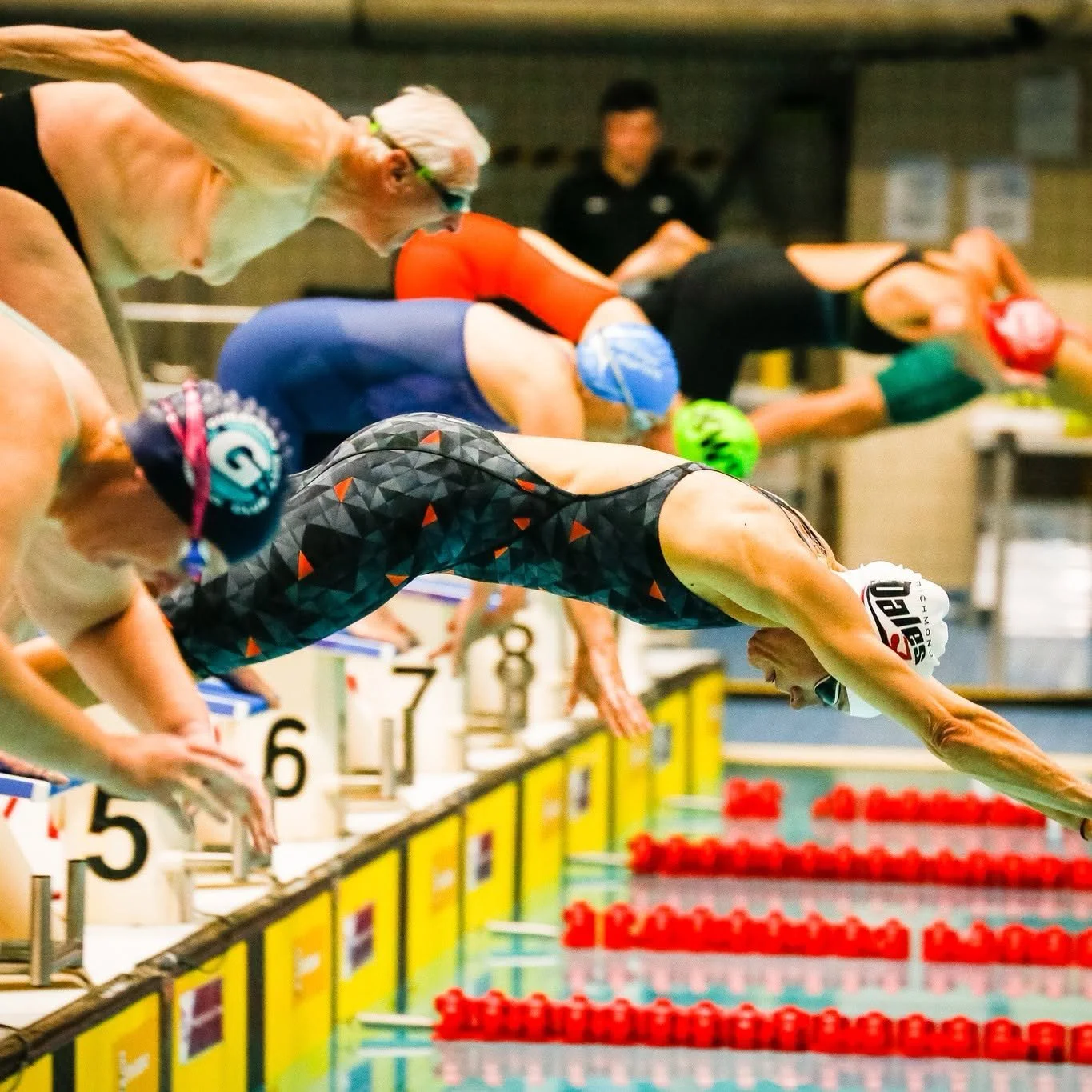
Day One: The darkness
Friday started well.
The drive to Sheffield was smooth. No rushing, no last-minute panic. I arrived ready to compete in the 200-metre freestyle and 50-metre freestyle.
But nothing could quite prepare me for how the day would feel.
There was so much waiting around. The poolside felt absolutely freezing, and I struggled to keep warm between warming up and racing. Everywhere I looked, there were incredible swimmers. Strong athletes. Fast times. People who seemed completely at home in this environment. And then there was me.
The little monkey on my shoulder started chattering.
You don't belong here.
What are you doing?
Look at all these swimmers. What makes you think you can compete with them?
I tried to ignore it, but the noise was there.
Then came the 200 freestyle. I went out too fast. By the time I reached 100 metres, I wanted to stop. I wanted to get out of the pool. But I kept going. I finished. And all I wanted to do was cry. When I saw my time, my immediate reaction was disappointment. I started picking my race apart, analysing every mistake and telling myself what I should have done differently.
My coach reminded me that the time wasn't the most important thing. And, with a little distance and a conversation afterwards, I began to see what I couldn't see in that moment. Under the circumstances, it was a good swim. It was my season's best. I had done better than I had any right to expect from myself, given what I had been dealing with. But in that moment, I couldn't recognise it.
There was still the 50 freestyle to come. More waiting. Another warm-up. More time getting cold. Finally, at around 6.30 pm, I was back behind the starting blocks. I had to put the 200 behind me. New event. New start. I stepped onto the block. And off I went. Despite everything, I finished strongly, just half a second outside my lifetime best. Half a second.
After the months I had experienced, that was something worth celebrating.
But by then, I was exhausted. Physically, mentally and emotionally.
I got showered, drove home, arrived at 9pm, ate and went to bed at around 10.30 pm. My alarm would be going off early the next morning. I needed to be back on the road by 5.30 am.
I hadn't enjoyed Day One.
I felt alone. I was the only swimmer from my club, without my team around me or my coach there to support me in person. I was cold. I was tired. My nervous system felt completely out of balance.
And when your system is already under pressure, everything can feel harder. The doubts become louder. Small disappointments feel enormous. Your ability to recognise your own achievements seems to disappear.
I couldn't see that I was doing well. All I could see was what I thought I was getting wrong.
Day One felt dark.
And I went to bed wondering what on earth I was doing there.
Day Two: Finding my way back
Somehow, I slept. Not perfectly, perhaps, but enough. And when Saturday morning arrived, I got myself together, climbed into the car and drove back to Sheffield.
I had two races left: the 400-metre freestyle and the 100-metre individual medley.
My coach had given me some simple advice.
Relax. Enjoy it.
That was it. No expectations. No demands to produce a particular time. Just relax and enjoy the experience.
I arrived, warmed up and started talking to some of the other swimmers. It turned out I wasn't the only one who had struggled the previous day. Others had found the conditions difficult too, particularly the cold on poolside. I felt an immediate sense of relief. Perhaps I wasn't being pathetic after all. Perhaps I was simply human, trying to compete at a high level in challenging circumstances while carrying a lot more than anyone else could see. Sometimes, a simple conversation with another person can change your entire perspective.
Then it was time for the 400 freestyle. Sixteen lengths. I didn't want to repeat the experience of the 200 the day before. I didn't want to go out too fast, fight my body and spend the rest of the race wishing I could stop. So I gave myself a mantra.
Relax. Enjoy. Relax. Enjoy.
And something shifted. I settled into the race. I focused on what I was doing rather than what everyone else might be thinking. I let myself swim. Of course it was hard. It's a race. It takes strength, concentration and determination to swim sixteen lengths at race pace. But it felt different. I enjoyed the race. I didn't achieve a personal best, but I swam consistently, adding less than a third of a second per length. That was a good swim.
More importantly, I felt good before it, during it and afterwards. I was beginning to find my way back to myself.
Between races, I chatted to other swimmers, watched people compete and allowed myself to enjoy the atmosphere. Watching these incredible athletes can be intimidating. The times, the performances, the medals, it's easy to become caught up in comparing yourself with everyone around you. But this time, I could also appreciate their achievements. I could enjoy watching them do their thing, especially during the team events. I was still there on my own, without my clubmates beside me. But I no longer felt quite so alone. And I began to understand something. The circumstances hadn't suddenly become perfect. I was still the same woman who had struggled the day before. My life hadn't magically sorted itself out overnight. I hadn't suddenly become a different swimmer.
What had changed was how I was meeting the experience. Instead of fighting everything, I was allowing myself to be there. Instead of trying to prove something, I was giving myself permission to participate. Instead of listening to every thought my mind produced, I was bringing my attention back to the race in front of me. And my breath helped me do that.
The breath: From fighting to finding peace
As someone who teaches breathwork, I spend a lot of time talking about the relationship between breathing, the nervous system and our ability to regulate ourselves. But knowing something intellectually and experiencing it in your own life are two different things. Breathwork doesn't make difficult circumstances disappear. It doesn't solve uncertainty at work, take away the worry of being a parent or guarantee a good night's sleep. And it certainly doesn't mean that we should be able to breathe our way out of every difficult emotion. But the breath can offer us a way to pause. A way to bring our attention back to the present moment. A way to notice when we're becoming caught up in the stories our minds are telling us. And, through gentle, comfortable breathing, it can support the body's natural regulation processes.
On Day One, I felt as though I was fighting an invisible battle.
But what was I actually fighting?
Was I fighting my body because it wasn't behaving as predictably as I wanted?
Was I fighting the voice in my head telling me I wasn't good enough?
Was I fighting the fear of being judged?
Was I fighting the possibility that I might not perform as well as I expected?Or was I fighting something much deeper, the belief that I always need to achieve more, do better and prove myself worthy?
Perhaps it was all of those things.
Perhaps it was the accumulated weight of months of uncertainty, responsibility and pressure finally catching up with me.
I can't say for certain. But I began to recognise how much energy I was spending fighting myself.
And on Day Two, I stopped trying so hard to win that internal battle.
I breathed. I softened. I returned to the moment I was actually in, rather than the one my mind was creating.
I wasn't trying to force myself to feel amazing. I wasn't demanding that my nerves disappear. I was simply giving myself a little more space. And in that space, I found something I hadn't felt much of lately.
Peace.
Not because everything was perfect, but because, for a little while, I stopped fighting the fact that it wasn't.
The race I never thought I would swim
My final event was the 100-metre individual medley.
Now, I need to explain something. I am a freestyler. I started competitive swimming at 49, and although I'm strong and fit, my technical skills across all four strokes aren't necessarily my greatest asset. The individual medley requires you to swim butterfly, backstroke, breaststroke and freestyle. It's not exactly the event I would have picked for myself when I first started swimming.
To qualify for the 100 IM was something I never imagined I would do.
To be brave enough to enter it was another achievement in itself.
But to stand behind the blocks, swim the race, absolutely love it and come away with a personal best?
That was something else entirely.
It was my favourite race of the weekend.
I left the pool on a high.
Not because I had suddenly become a different athlete.
Not because I had proved that I was better than everyone else.
But because I had allowed myself to enjoy something I love.
And I had done something that, not so many years ago, I would never have believed possible.
Sometimes, we become so focused on the outcome that we forget to appreciate the courage it took to get to the starting line. I very nearly didn't make it to Sheffield at all, at least not in the state of mind I had hoped for.
But I went.
I raced.
I learned.
And I finished the weekend with a smile on my face.
What my coach said that made me stop and think
After the competition, I had a conversation with my coach that has stayed with me. He coaches children as well as masters swimmers.
For children, sport can be about developing so much more than athletic ability. It teaches work ethic, discipline, resilience, routine, confidence and how to respond when things don't go to plan. The stopwatch matters, of course. But it isn't the only measure of what they gain from participating.
Masters swimmers are adults. We bring decades of life experience with us. Many of us have already developed those qualities through our careers, relationships, families and everything else life has thrown at us. So what should we be getting out of our sport?
Joy. Pleasure. The opportunity to do something we love.
We should be swimming because we love swimming. And if we're fortunate enough to be good at it, to qualify for championships and compete alongside some of the best athletes in the country, that is an incredible bonus. But somewhere along the way, it's easy to lose sight of that. We arrive at competitions surrounded by amazing swimmers. We see their times, their medals and their performances. And suddenly, we start questioning whether we deserve to be there.
We forget that we qualified.
We forget the hours of training.
We forget the work we've put in, the challenges we've overcome and the lives we lead outside the pool.
We forget that we have earned our place.
Instead, we come away thinking that because we didn't achieve a personal best or win a medal, we shouldn't have been there in the first place.
REALLY!!!!!?????
And here's another thing I've noticed. Listen to conversations between athletes after a race. We're remarkably good at putting ourselves down. We tell each other what went wrong, what we should have done differently, where we lost time and why the performance wasn't quite good enough. Even when someone says they're pleased with their swim, there's often a big fat BUT waiting around the corner.
I'm pleased with it, but I could have gone faster.
It was a good race, but I messed up the turn.
I'm happy with my time, but it's nowhere near my best.
Why is it so difficult to say, simply and without qualification:
I did well. I'm pleased with myself. I enjoyed that.
Why do we feel the need to justify our achievements before we're allowed to celebrate them?
And why is being proud of ourselves so uncomfortable?
That last question hit home.
The uncomfortable business of being proud
When I look back at my swimming journey, I know I have achieved something remarkable. I started competitive swimming at 49. Since the pandemic, I've qualified for every English and British Masters Championships for which I've competed. I've also achieved qualifying times for European and World Masters Championships, although I've unfortunately not been able to afford to travel to compete at those events. That's a lot of hard work. A lot of early mornings, training sessions, determination and commitment. And yet, when I say that out loud, I feel uncomfortable.
Do I feel special?
No.
Am I proud of myself?
I should be.
But there's a part of me that still feels a degree of shame about admitting it.
As though acknowledging my achievements somehow means I'm boasting. As though being pleased with myself needs to be justified. As though I should always be doing more. I seem to have an endless capacity to move the goalposts. Achieve one thing, and the next target appears. Reach a qualifying time, and now I need a personal best. Get to a championship, and now I need to prove I belong there. Perform well, and I immediately start thinking about how I could have performed better.
And it's not just swimming. I recognise this pattern in other areas of my life, too. In work. In motherhood. In my business. In the expectations I place on myself.
I want to do well. I want to make the people who support me proud. I want to show my coach that his time and effort are worthwhile. I want to be the woman who can handle everything. But sometimes, I wonder how much of that pressure actually comes from other people.
How much of it have I created myself?
How much of my life have I spent trying to prove that I'm enough?
And what would happen if I stopped?
What if I could simply enjoy what I've achieved without immediately looking for the next thing to conquer?
What if I could be proud without feeling guilty?
What if I could give myself the same encouragement I would so readily offer another woman who was struggling?
These are uncomfortable questions. But perhaps they're the questions I need to be asking. My coach told me something that really made me think. He said he would be much happier if I came back from competitions saying:
I absolutely loved today. I really enjoyed my racing.
Not that I'd achieved a particular time.
Not that I'd beaten someone else.
Not that I'd won a medal.
That I'd enjoyed myself.
And, after this weekend, I think I understand why. Because the times will change. Our bodies will change. Life will continue to throw things at us that we cannot control. But if we lose the joy in the things we love because we're too busy trying to prove ourselves, what are we actually working towards?
Four races. Four opportunities to learn.
I went to Sheffield hoping to do my best.
I prepared as well as I could. I focused on my nutrition, training, sleep and mindset. I used the tools I had available to me.
I did everything I could to give myself the best chance.
Did that result in four personal bests from four swims?
No.
But that's not the whole story.
I swam a season's best in the 200 freestyle.
I finished the 50 freestyle just half a second outside my lifetime best.
I swam a controlled, enjoyable 400 freestyle, adding less than a third of a second per length.
And I achieved a personal best in the 100 individual medley, my favourite race of the weekend.
Four swims. Different outcomes. Plenty to learn from.
But the biggest achievement might have been what happened between those races.
I learned that one difficult day doesn't have to define the next.
I learned that I can feel overwhelmed and still show up.
I learned that I can be nervous without letting fear make every decision for me.
I learned that I don't have to feel confident every minute to do something brave.
And I learned that sometimes, the most important thing I can do is change my relationship with the experience rather than trying to control the outcome.
Day One was dark.
Day Two brought me back into the light.
Not because I suddenly became stronger, fitter or more talented overnight.
But because I stopped fighting myself quite so hard.
From darkness into light
As I reflect on the weekend, I keep coming back to the connection between our nervous system and the stories we tell ourselves. When we've been under prolonged stress, it can become harder to sleep, recover, concentrate and regulate our emotions. Everything can feel like another demand to manage, another challenge to overcome, another test we have to pass. And when we're in that state, our inner critic can become incredibly loud.
We see what we've done wrong rather than what we've done well.
We compare ourselves with others rather than appreciating our own progress.
We interpret a disappointing result as evidence that we're not good enough.
We forget that we're human.
For me, the breath has become one of the ways I find my way back.
Not by forcing myself to be calm.
Not by pretending that everything is fine.
Not by using another technique to push through when what I really need is rest.
But by creating moments of space.
By noticing when I'm holding tension, rushing or getting caught up in my thoughts.
By returning to gentle, comfortable breathing and allowing myself to settle.
By reminding myself that I don't have to fight every feeling or solve every problem in the moment it appears.
Sometimes, I need to take action.
Sometimes, I need to ask for help.
Sometimes, I need to rest.
And sometimes, I simply need to breathe and remember that I am here, in this moment, and that this moment is enough.
That's what I want Limitless to represent. Not a promise that life will always be easy. Not the expectation that we should be able to overcome anything if we just try hard enough. But the understanding that we can learn to meet life's challenges differently. That we can build a relationship with ourselves that is less about criticism and more about compassion. That strength isn't always about pushing harder. And that resilience doesn't mean we never struggle.
Sometimes, strength is getting out of bed when everything feels difficult.
Sometimes, it's admitting that we need to slow down.
Sometimes, it's stepping onto a starting block when a voice inside us is saying we don't belong.
And sometimes, it's allowing ourselves to enjoy the race without needing it to prove anything.
I love swimming.
I love competing.
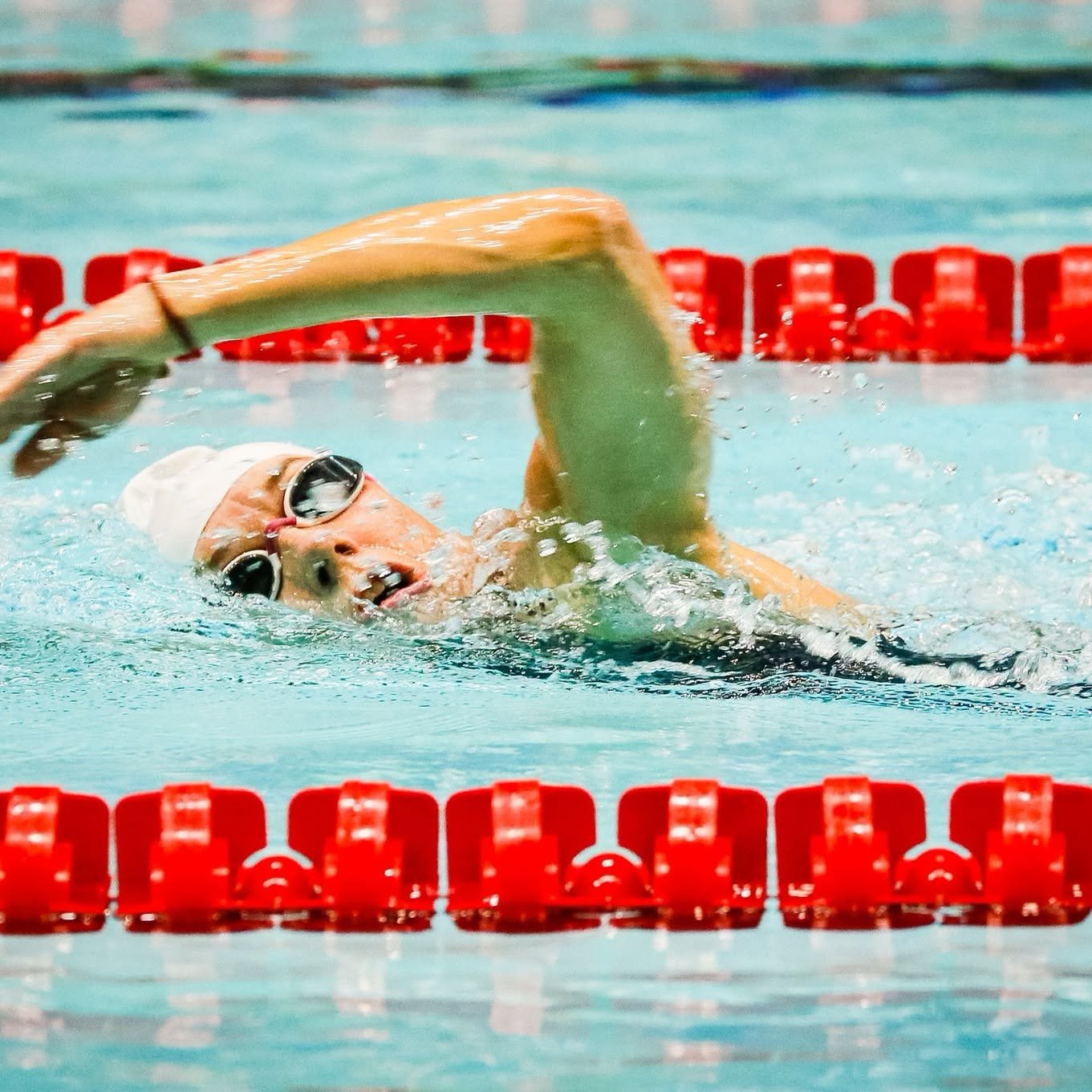
And I want to keep doing both for as long as I can. But I also want to learn to enjoy what I achieve rather than immediately focusing on what I haven't. I want to celebrate the woman who turned up, not just the time on the stopwatch. I want to be able to say, without embarrassment or qualification, that I did well.
That I'm proud of myself.
That I have achieved something worth celebrating.
Perhaps that's my next challenge.
Not another qualifying time.
Not another personal best.
But learning to be kinder to myself along the way.
Because if there's one thing this weekend has reminded me of, it's that we can spend so much of our lives fighting to be good enough that we forget we were never supposed to earn our worth in the first place.